
News
The Salvage Economy Part 5 Taste on a Cycle: Why Each Generation Rediscovers the Last One's Trash
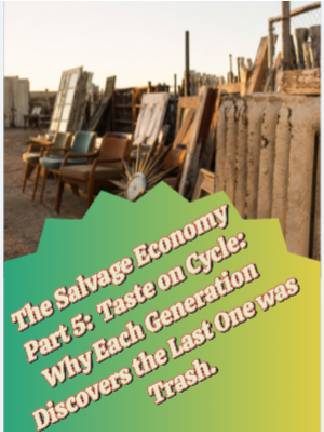
Ever wonder why design trends repeat? Discover how the 2-generation cycle transforms outdated decor into valuable vintage—and how to smart-buy at salvage yards.
The Salvage Economy Part 4 / When Old Parts Became Collectible
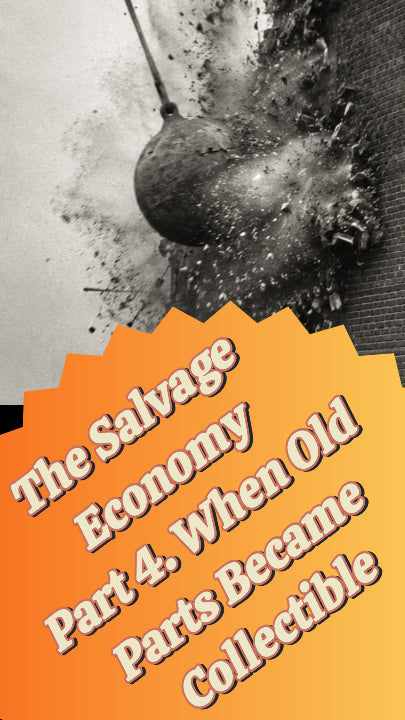
Mid-century urban renewal leveled countless handcrafted buildings, abruptly cutting off the supply of traditional building materials just as tastes were shifting. With handmade parts no longer being produced, genuine scarcity set in, while people surrounded by mass-produced goods began to prize the aged, hand-worked craftsmanship these older pieces represented. What was once wrecking-yard waste became prized inventory, giving rise to a dedicated salvage trade organized around period, condition, and rarity. In this way, old fixtures shed their purely functional role and took on a second worth, valued not just for use but for their history, scarcity, and symbolic tie to the past.
The Salvage Economy Parts 3: Class and the Cast-Off: Who Bought Salvage, and Wh.
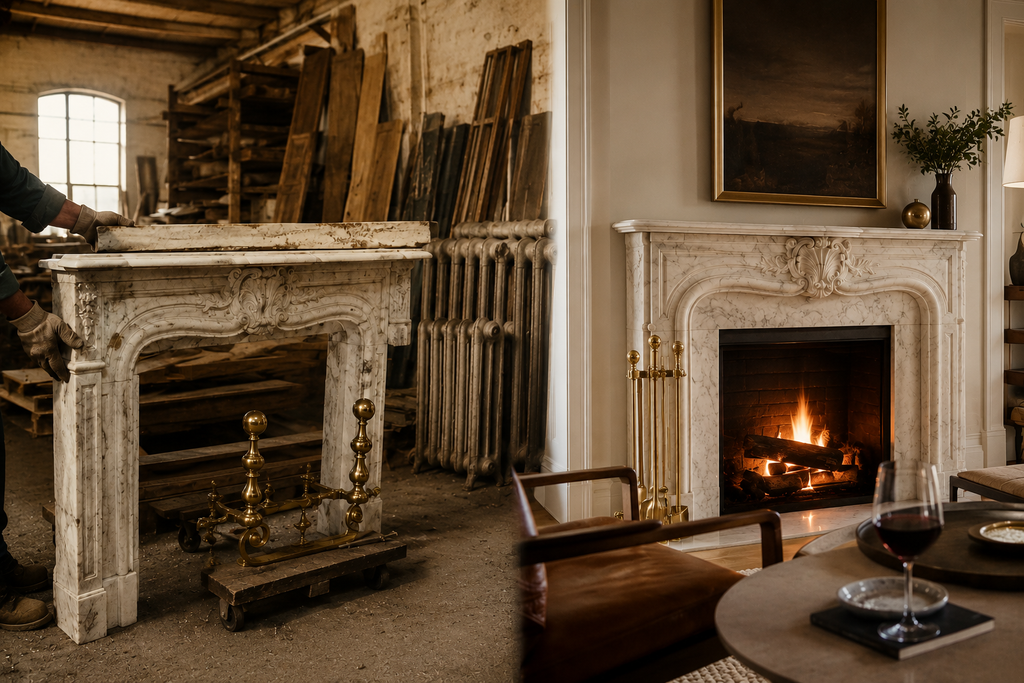
A marble mantel or brass fixture used to mark a household as too poor for new. Today the same salvaged part reads as taste, not need. The object never changed — only the cultural code attached to it did, and that shift is more recent than it feels.
The Salvage Economy Part 2 Secondhand Before It Was "Vintage"
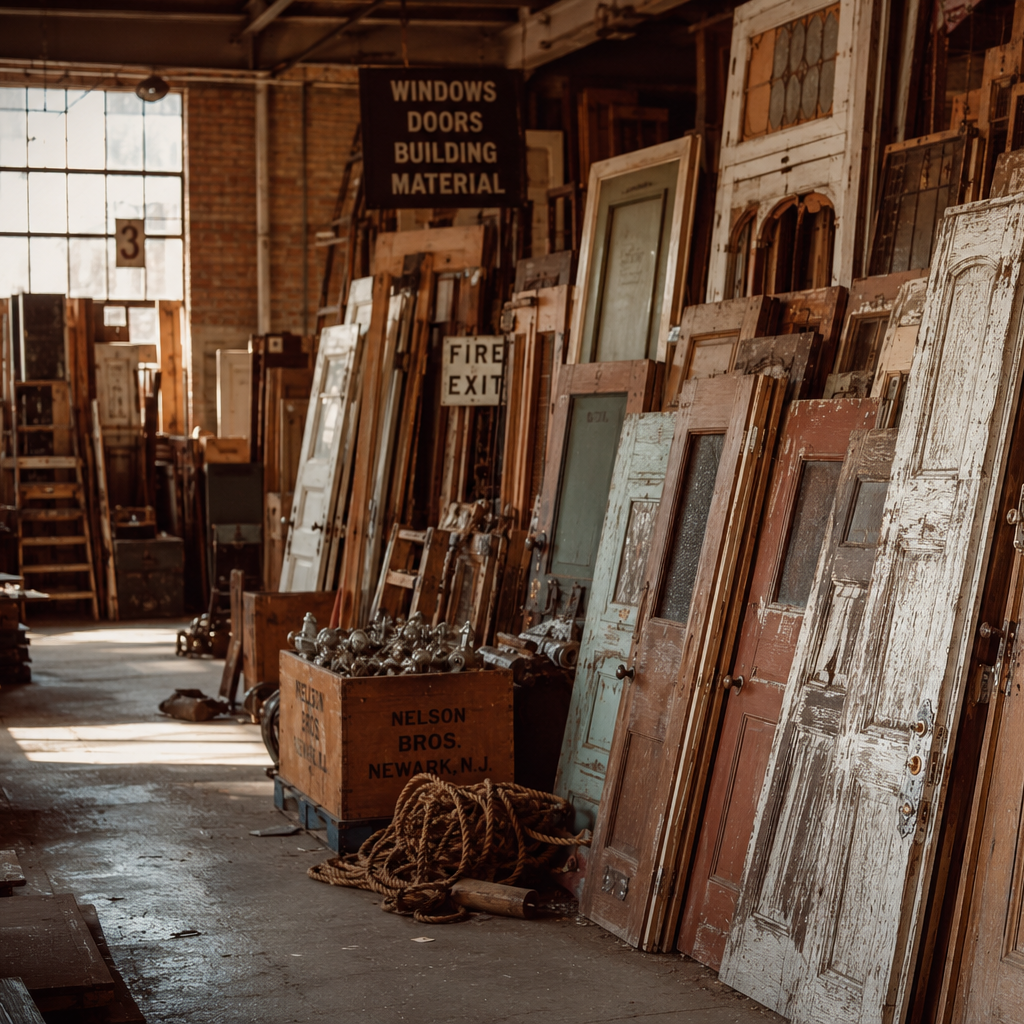
Before "vintage" was a marketing term, architectural salvage was just practical reuse. When old buildings came down, wreckers stripped and resold doors, bricks, and hardware, not for nostalgia, but because used parts were simply cheaper than new ones.
"Vintage" only attached itself to old building parts later, once mass production made handmade pieces look distinctive by comparison and preservationists began framing salvage as history worth saving, not just scrap.
The twist: today's salvage yards do the same physical work as the old junk dealers. What's changed is the story attached to the object, and the price that story commands.
How Demolition Became a Trade | Vintporium Salvage
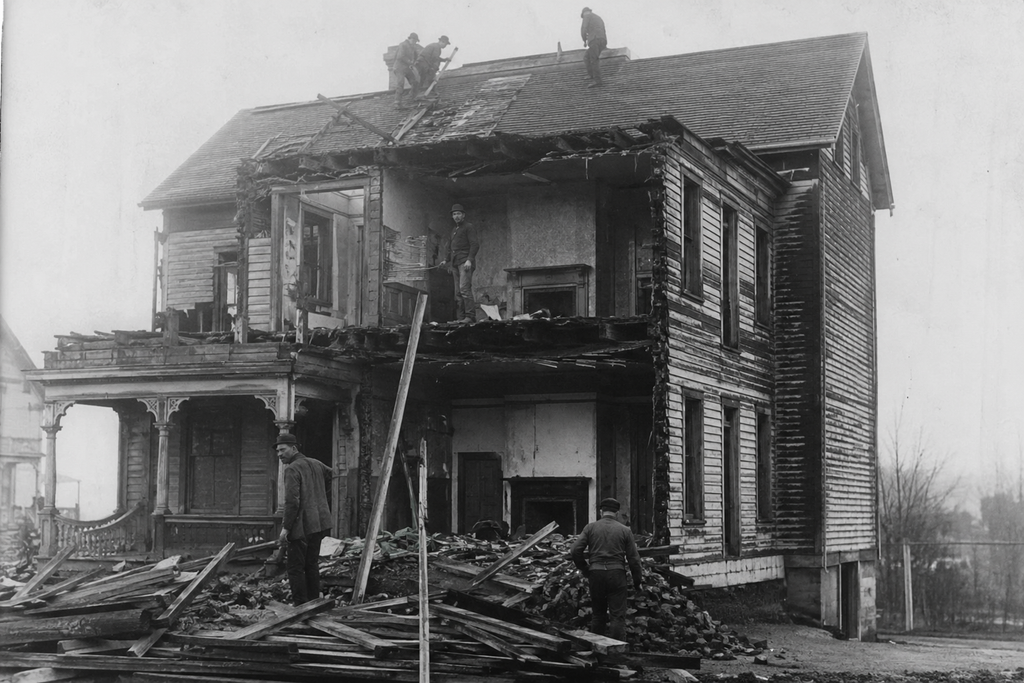
Before it was preservation, salvage was profit. This piece traces how the nineteenth-century wrecking trade — driven by ledgers, not sentiment — decided which fixtures, glass, and hardware survived demolition, and why the pieces that made it out intact did so almost by accident.